For most homeowners, the answer is no. But the full picture depends on where the doors are going, what your property is, and which part of London you live in.
Steel doors are increasingly popular across South and West London. From open-plan kitchen extensions in Wandsworth to garden room conversions in Wimbledon, the slim black frame look has become a defining feature of high-end residential renovation. Before you commit, though, it pays to understand the planning rules clearly. Getting this wrong is an expensive mistake.
This guide covers the main scenarios you are likely to face and what to do in each one.



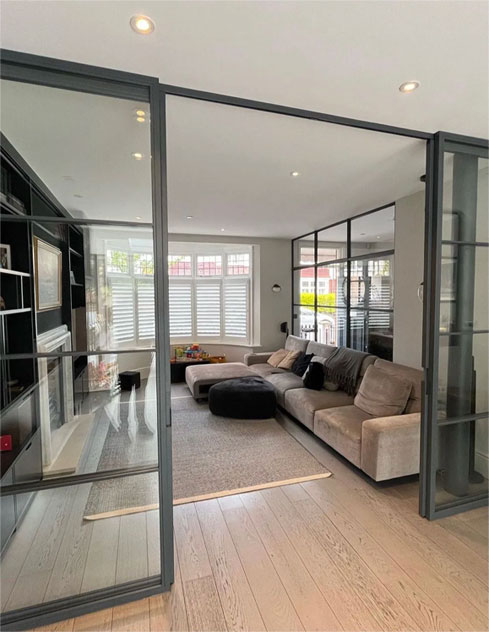
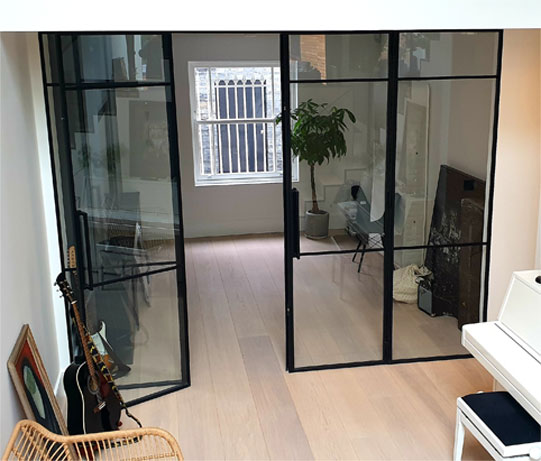
If you are fitting internal steel doors inside your home, you do not need planning permission. Full stop.
Internal doors, partitions, and glazed screens are considered interior alterations. They do not affect the building’s external appearance and fall entirely outside the scope of planning control. Whether you are installing a single steel-and-glass door between your kitchen and dining room, or a full run of steel-framed partitions across an open-plan floor, no planning application is required.
Building regulations are a separate matter. If you are installing a fire door to comply with fire safety requirements, or if structural work is involved in the installation, building control may apply. But planning permission itself is not part of the picture for internal works.
This is good news for the majority of enquiries Refine receives. Most of the internal steel door projects we install in Kensington, Chelsea, Fulham and Battersea require no planning permission.

This is where homeowners in many of Refine’s core areas need to pay the closest attention. Large parts of Chelsea, Kensington, Putney, Wandsworth and Fulham sit within designated conservation areas. The rules here are stricter.
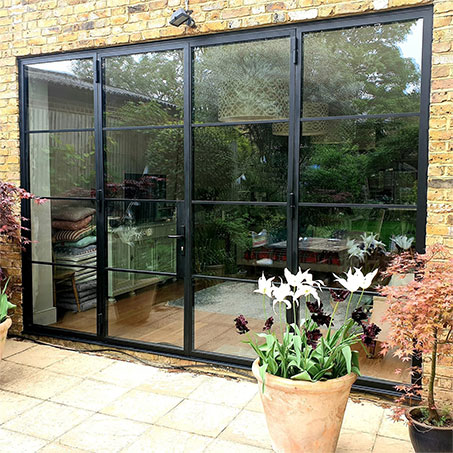
In a conservation area, permitted development rights for certain external changes are removed or restricted. Replacing an external door or window with something of a noticeably different appearance, including a change of material or style, can require planning permission even when it would not elsewhere. The council is protecting the area’s character, and they take that seriously.
Slim, dark-framed steel doors have been approved in many London conservation areas, particularly on rear elevations where they are not visible from the street. The key is how well the proposed installation respects the building’s character and its surroundings. A sympathetic design, fitted by an experienced installer who understands local planning expectations, is far more likely to sail through than something that looks out of place.
If you live in a conservation area and are considering external steel doors, we would always recommend confirming your position with the council before ordering. Refine can advise on designs and finishes that are more likely to be viewed favourably.
If your home is a listed building, you need listed building consent for any works that affect its character as a building of special architectural or historic interest. This applies to internal as well as external works, which is the key difference from standard planning rules.
Changing doors, windows or partitions in a listed building without consent is a criminal offence. There is no grey area here.
Consent is granted by the local planning authority, and the bar for approval in a listed building is higher. That said, steel doors and windows have a long history in British architecture. Many Georgian and Victorian properties originally had metal frames, and well-designed steel installations can be sympathetically approved. The argument for heritage-appropriate steel can be compelling.
If you believe your property is listed, check the Historic England register at historicengland.org.uk before proceeding with any work.

A few practical steps that will save you time and money:
Check whether your property is in a conservation area. Your local council’s website will have a conservation area map. Most London boroughs publish them online.
Find out if your property is listed. The Historic England register is free to search and takes two minutes. If it is listed, speak to your local planning authority before you do anything.
For external door replacements on non-listed properties outside conservation areas, check whether your replacement is broadly like-for-like. If it is, you are almost certainly within permitted development rights.
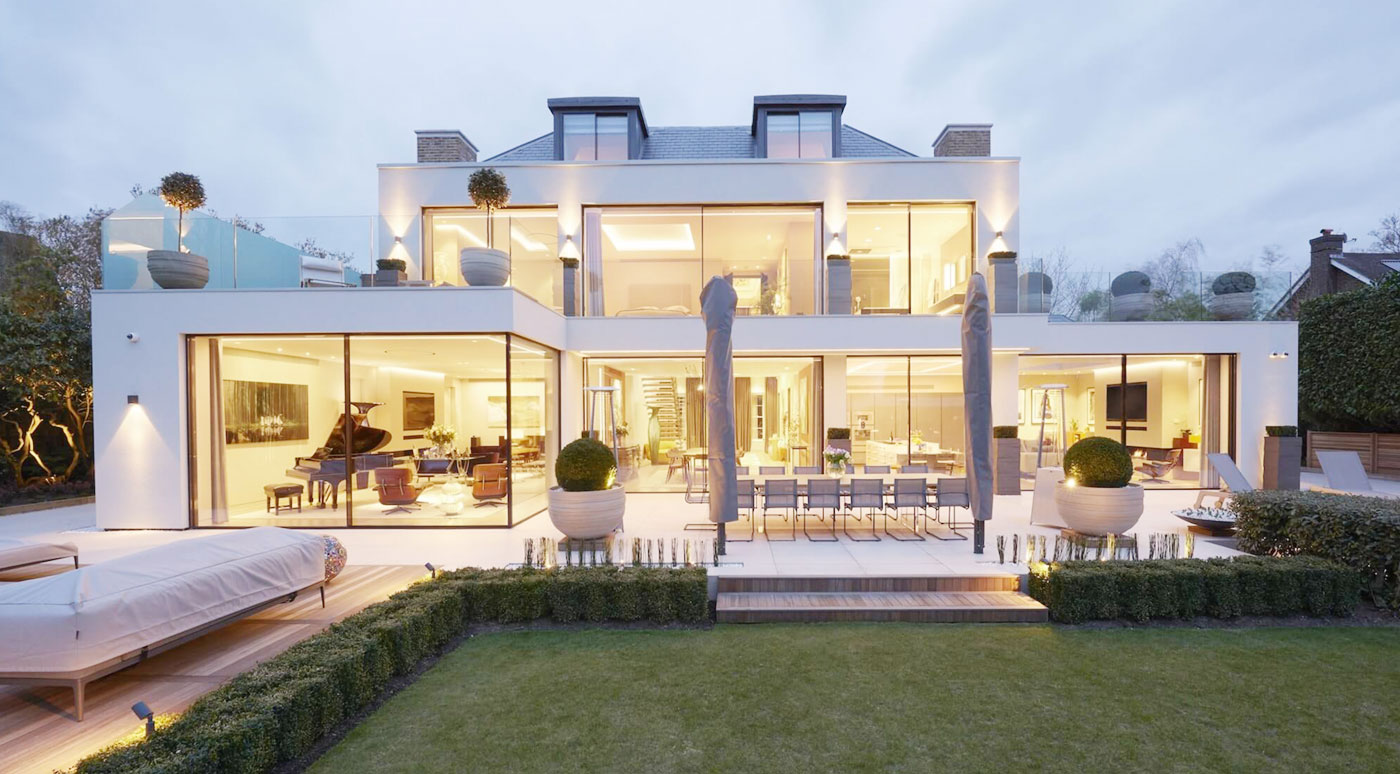
If you are building an extension and want steel doors as part of it, the extension application covers the doors. You will not need a separate application for the doors themselves.
When in doubt, a pre-application enquiry to your local planning authority is free or low-cost and gives you a written position to work from. It is worth doing.
For internal steel doors, no planning permission is required. For external steel doors, it depends on whether you are replacing like-for-like or making a change that materially affects the building’s external appearance. Conservation area and listed building rules apply additional restrictions.