The honest answer is that the price range for internal steel doors in the UK is wide. You will find figures online ranging from a few hundred pounds to well over ten thousand. That gap is not random. It reflects genuinely different products, different fabrication methods, and different levels of installation complexity. Understanding what sits at each point on that range is more useful than any single headline figure.
This guide breaks down what actually affects the cost of a made-to-measure internal steel door in the UK, what you should expect to pay for a quality installation, and what questions to ask before you commit.



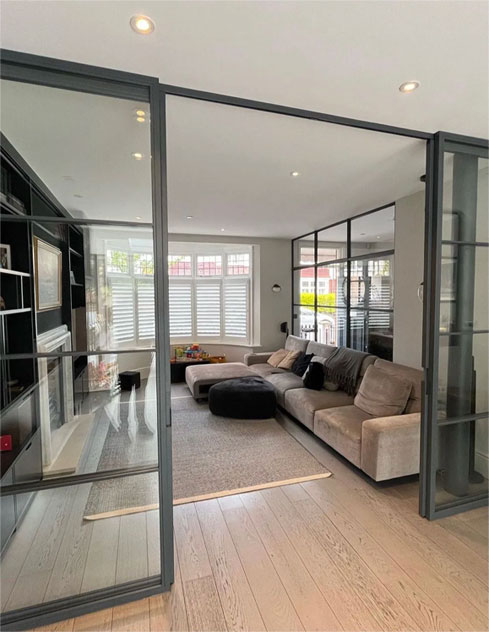
Before looking at cost, it helps to understand what you are paying for. Internal steel doors are not timber doors with a different material. They are precision-engineered frames with narrow sightlines, designed to hold large panels of glass while minimising the visual obstruction of the frame itself.
The profile width of a quality slimline steel door can be as narrow as 25mm. A standard timber door frame sits closer to 65mm. That difference in sightline is the whole point. More frames mean less glass, less light, and a heavier visual presence in the room. Getting the sightline right requires a level of fabrication precision that standard joinery does not.
Every door is made to measure. The opening dimensions, ceiling height, glazing specification, finish colour, and hardware all feed into the final product. There is no standard size and no off-the-shelf version that delivers the same result. That is why the cost sits where it does.

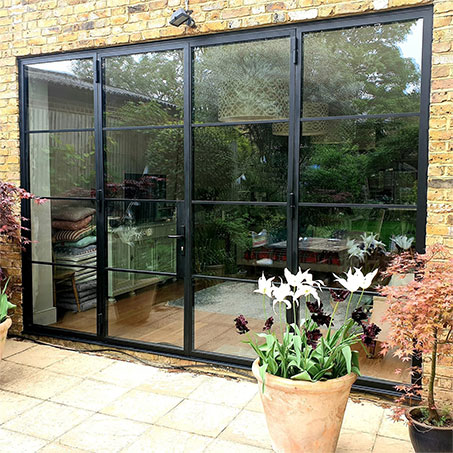
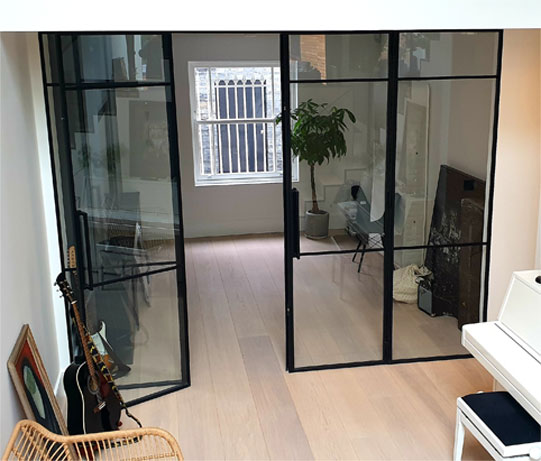
For a made-to-measure slimline internal steel door with quality glazing and a powder-coated finish, most UK homeowners should expect to budget between £2,000 and £5,000 for a single door, including installation. Double-door configurations typically sit between £4,000 and £9,000, depending on size and specification. Full steel partition systems with one or more doors can cost from £6,000 upwards, depending on the span and complexity.
These are not budget figures. They reflect what a properly fabricated and installed steel door actually costs, including materials, lead time, and skilled installation. Products sitting significantly below this range are usually either aluminium marketed as steel, mechanically fixed rather than welded, or supplied without installation.
Narrower profiles cost more to produce. A 25mm sightline requires tighter fabrication tolerances than a 40mm one. For homeowners whose visual minimalism is the point, this is the specification worth paying for. It is the detail that distinguishes a quality steel door from a lookalike.
If the door is going into an existing aperture in good condition, installation is straightforward. If a new opening is being created or the existing lining needs to be rebuilt, structural preparation adds cost and time. A survey before fabrication is essential for this reason. It is how the right measurements are confirmed and how surprises during installation are avoided.
Projects involving multiple doors across a property can be more cost-effective per door than a single installation. Fabrication and installation logistics scale differently when multiple openings are addressed in a single visit.
Aluminium internal door systems are available at lower price points, and some are marketed with profiles that look similar. The practical difference lies in the sightline. Aluminium cannot achieve the same narrow frame dimensions as steel without compromising structural integrity. True slimline sightlines require steel.
For homeowners whose design intent makes the frame’s visual impact central, aluminium is not a direct substitute. For those where cost is the primary driver and the sightline is less critical, aluminium may be appropriate. The two are different products serving different priorities.

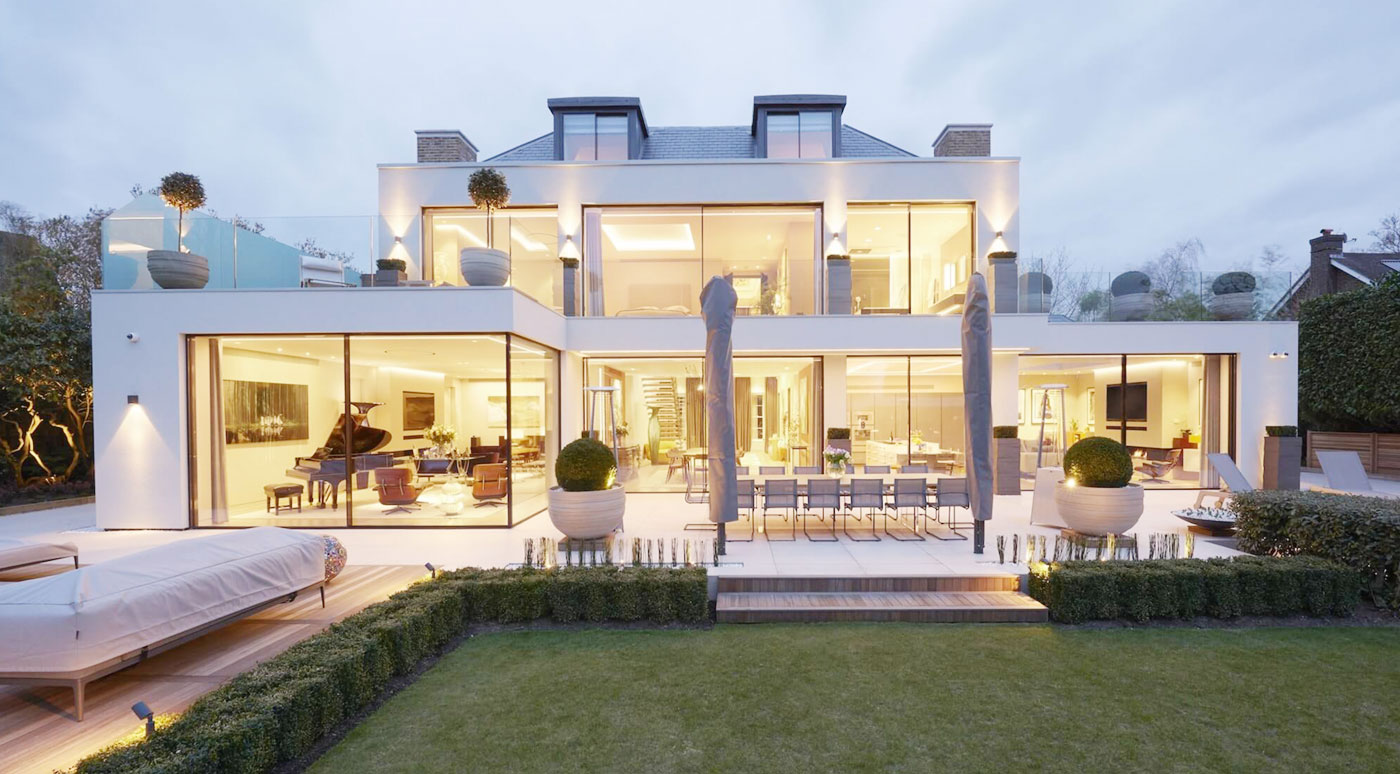
Beyond internal partitions, Refine Inc also installs glass rooflight systems and slimline sliding glass doors. Rooflights are priced by size and whether the roof is flat or pitched, with bespoke made-to-measure units for both. Sliding glass doors for internal or external use follow similar pricing logic to hinged doors, but with the addition of the track and sliding mechanism.
Both benefit from the same survey-first approach. Getting the measurements right before anything goes to fabrication is the step that keeps costs predictable.